-
By Aya Ayman

Saudi Arabia is rapidly becoming a global hub for innovation, technology, and sports. As part of Vision 2030, the Kingdom continues to invest in advanced industries, smart infrastructure, world-class sporting events, and digital transformation initiatives that are reshaping the future of engineering and manufacturing.
Behind every successful innovation lies a deep understanding of how products behave in the real world. Whether engineers are designing industrial equipment, consumer products, transportation systems, or sports technologies, they must evaluate performance, reliability, and efficiency before production begins.
This is where simulation technology becomes essential.
SOLIDWORKS Simulation enables engineers to test, validate, and optimize designs in a virtual environment, reducing development costs while accelerating innovation. Interestingly, many of these engineering principles can be demonstrated through one of the world’s most popular sports: football.
By analyzing football physics, engineers can better understand how simulation technologies solve real-world engineering challenges across industries.
Every football match showcases the principles of physics and engineering.
When a player strikes a football, several forces immediately come into action:
Although fans focus on the excitement of the game, engineers see an opportunity to analyze these forces using advanced simulation tools.
The same technologies used to understand football performance are applied daily in product design, manufacturing, aerospace, energy, and industrial engineering projects across Saudi Arabia.
One of the most important engineering disciplines is structural simulation.
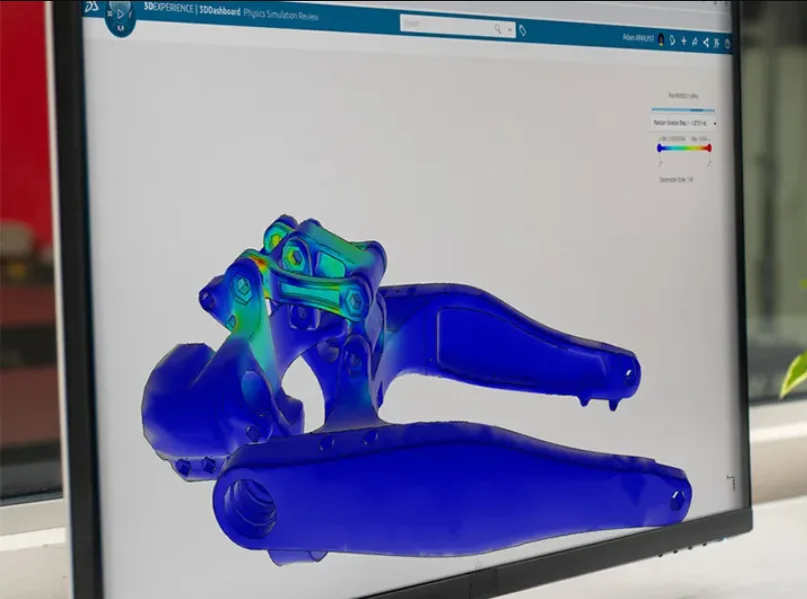
When a football is kicked at high speed, the ball experiences significant stress and deformation. Engineers must understand how materials respond to these forces to ensure durability, safety, and performance.
Using SOLIDWORKS Simulation, engineers can:
Instead of building multiple physical prototypes, engineers can perform virtual testing and gain valuable insights before manufacturing begins.
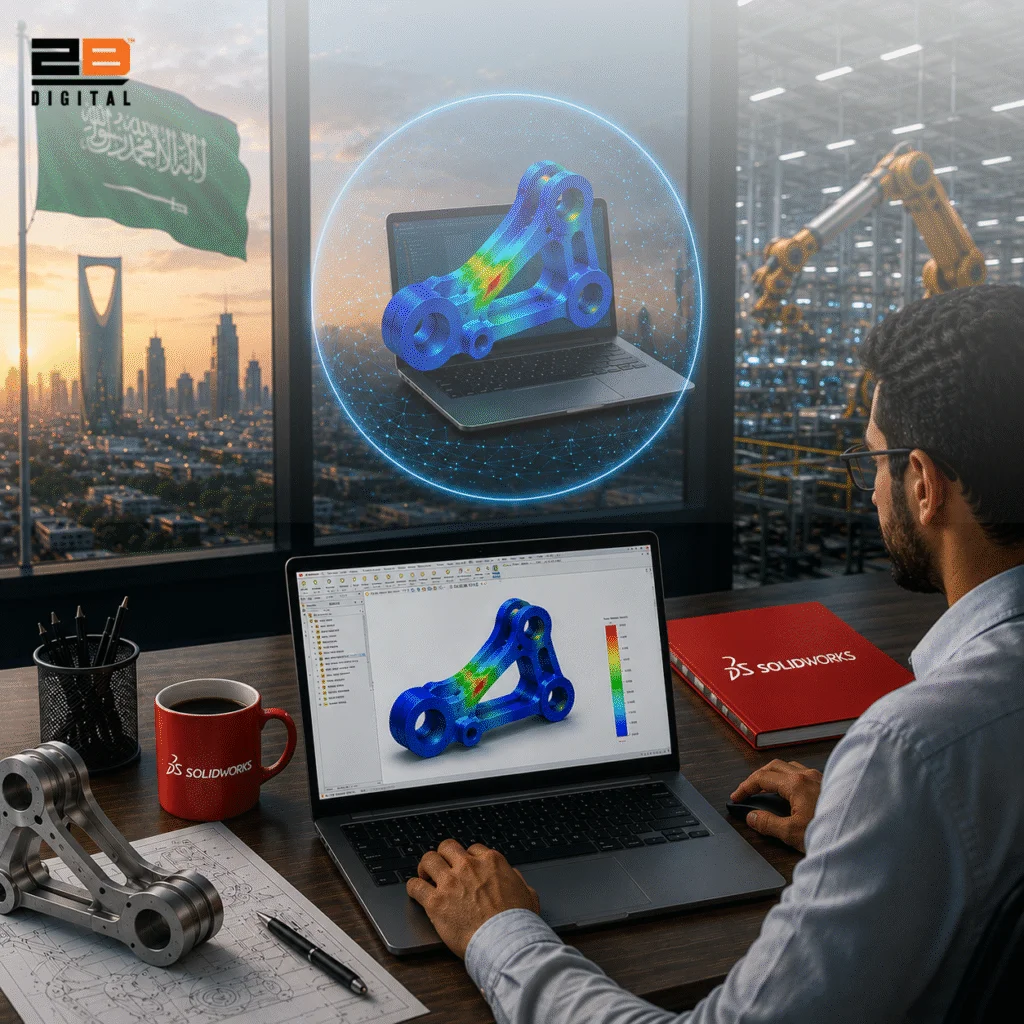
Structural simulation is widely used across Saudi Arabia’s industrial sector to support:
As Saudi manufacturers continue modernizing operations under Vision 2030, simulation helps organizations improve product quality while reducing development costs.
One of the most fascinating moments in football occurs when a player delivers a perfectly curved free kick.
This movement is influenced by aerodynamic forces acting on the spinning ball.
As the football rotates through the air, differences in air pressure create forces that alter its trajectory. This phenomenon, known as the Magnus Effect, demonstrates the importance of fluid dynamics in engineering.
SOLIDWORKS Flow Simulation allows engineers to study:
Through Computational Fluid Dynamics (CFD), engineers can visualize how air interacts with products before they are manufactured.
Modern sports increasingly depend on digital technologies.
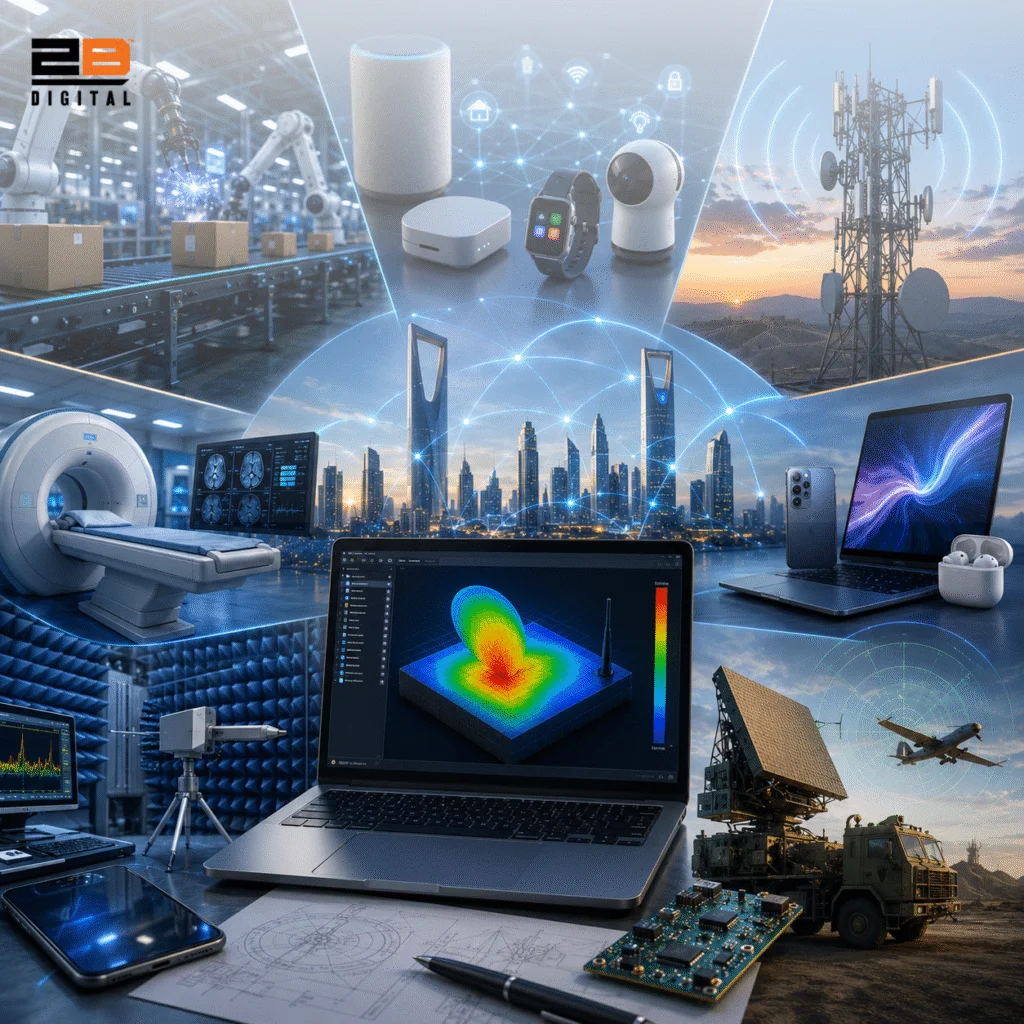
Goal-line systems, wearable devices, smart sensors, player tracking systems, and connected stadium infrastructure all rely on electromagnetic performance.
To ensure these systems function reliably, engineers must evaluate:
Simulation enables engineers to identify potential issues before deployment.
Electromagnetic simulation is widely used across industries including:
As Saudi Arabia accelerates digital transformation initiatives, engineers increasingly rely on simulation tools to support connected technologies and Industry 4.0 implementations.
Simulation has become one of the most valuable skills in modern engineering.
Organizations no longer rely solely on physical testing. Instead, they use virtual validation to reduce costs, improve quality, and accelerate product development.
Engineers with simulation expertise can:
As Saudi Arabia continues investing in advanced manufacturing and technology-driven industries, demand for simulation skills continues to grow.

Vision 2030 aims to diversify the Saudi economy through innovation, industrial development, and technological advancement.
Simulation directly supports these goals by enabling organizations to:
For engineering students, professionals, and manufacturers, learning simulation represents an investment in future success.
Manufacturers face increasing pressure to deliver higher-quality products while reducing costs and accelerating time-to-market.
SOLIDWORKS Simulation helps organizations achieve these objectives by enabling engineers to test ideas virtually before committing to production.
Key advantages include:
Whether designing industrial equipment, optimizing manufacturing systems, or developing innovative technologies, simulation provides valuable insights throughout the product development process.

As an authorized SOLIDWORKS partner, 2B Digital Saudi Arabia helps manufacturers, engineering teams, and educational institutions implement simulation technologies that improve product development and engineering performance.
Whether you are exploring structural analysis, CFD simulation, or advanced engineering solutions, our team can help you identify the right tools for your requirements.
Contact 2B Digital Saudi Arabia today to discover how SOLIDWORKS Simulation can support your innovation and digital transformation goals.
By
Aya Ayman 
